When we send our children off to school each morning, we expect one fundamental thing: that the building they walk into is safe. But as parents and community members, we know that modern safety is built on more than just trust. It requires a proactive, reliable plan to protect classrooms from unpredictable threats.
Wanting a higher standard of physical security for your child isn’t about giving into fear—it is about demanding practical accountability. Traditional measures like locked exterior doors and lockdown drills are essential foundations, but they are no longer the finish line. True peace of mind comes from knowing our schools have an active, physical layer of defense inside the building and inside the classroom where students and teachers spend their days.
3 Steps Your District Can Take
Advocating for advanced safety infrastructure means shifting the conversation from basic lockdown drills to concrete, physical protection. By introducing decision-makers to fixed, ballistic-tested steel shelters that are installed directly inside classrooms and communal spaces, you provide a solution that virtually eliminates human error during a crisis. Here are the precise steps you can take to bring this life-saving protection to your local campus.
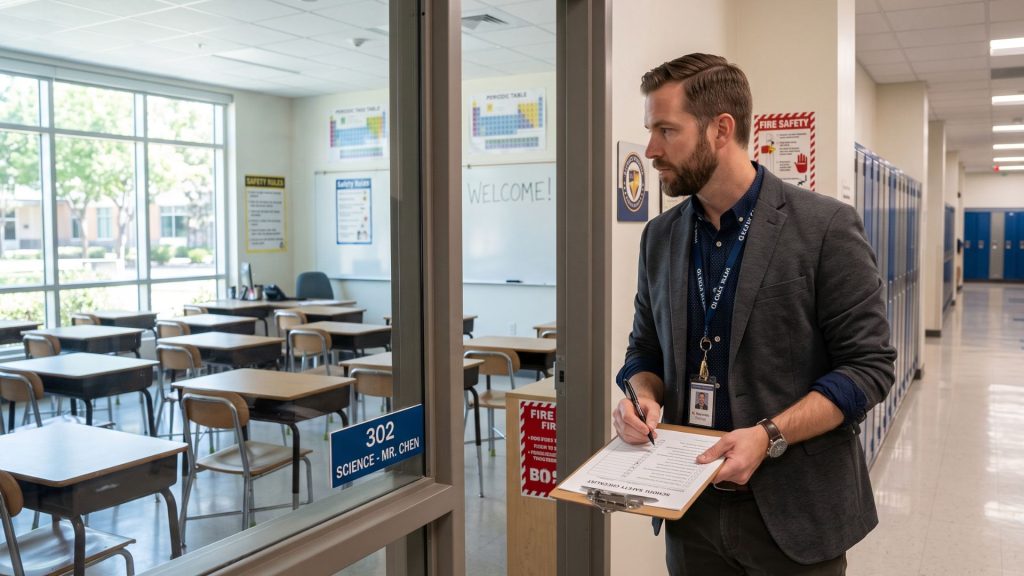
1. Request a Safety Assessment or Audit
Every effective safety strategy begins with data. Schedule a meeting with your school’s principal or the district’s safety coordinator to ask about their current emergency response protocols. Rather than approaching the meeting with accusations, frame it as a partnership.
Ask direct, objective questions about their physical security:
- How old are the classroom doors, and are they ballistically rated?
- What is the exact evacuation or shelter-in-place protocol for high-traffic communal zones like cafeterias, gyms, or libraries?
- Has the district evaluated localized, fixed safety structures that provide instant, mechanical-free protection during an active threat or severe weather event?
By requesting a formal review, you compel the district to critically assess the gaps between its current passive measures and modern active defense standards.
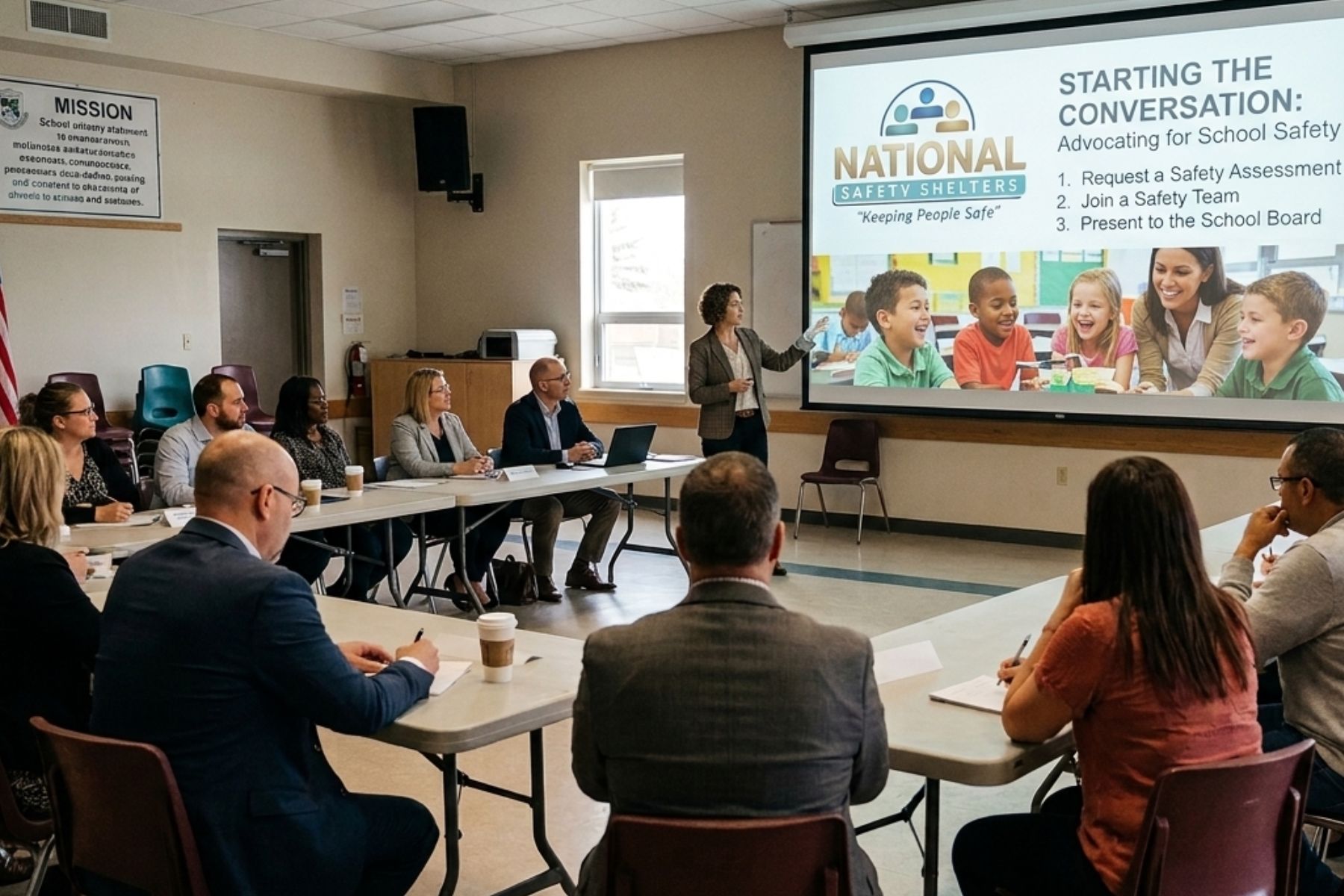
2. Join a Team of Like-Minded Parents and Staff
A single voice can be ignored, but a collective chorus cannot. Join your district’s School Safety Team, or ask for one to be formed. It is important to connect with other parents, members of the Parent-Teacher Association (PTA), and school staff.
When you discuss the concept of fixed classroom mini-shelters with teachers, you will often find deep allies. They understand better than anyone the dangerous realities of modern education.
Once you join the safety team, you can build momentum by taking these immediate actions:
- Choose regular meeting dates: Establish a consistent schedule to keep your core advocates aligned, share updates, and map out your next steps.
- Decide what your main goal is: Define exactly what you want to achieve—whether that is securing a commitment for a physical security audit or demanding the installation of classroom safety shelters.
- Participate in local events: Use community gatherings, town halls, and school functions to make your voice heard and bring the conversation about active protection into the public eye.
- Spread the word about your mission: Actively share information on the benefits of fixed, ballistic-tested infrastructure to educate other parents and grow your network of support.
3. Present Solutions Directly to the School Board
Once you have your data and your safety team, it is time to take the conversation to the decision-makers. Attend the next public school board meeting. Use the public comment period to speak confidently and authoritatively.
It is important to avoid emotional speculation and stick to compelling facts:
- Emphasize that modern threats require modern, engineered solutions like localized, ballistic-tested steel shelters.
- Highlight that fixed structures eliminate human error and any deployment issues during a crisis, ensuring students are safe within seconds.
- Request that the board form a dedicated school safety committee—inclusive of parent representatives—to formally review advanced infrastructure solutions.
Real change in school security starts with staying informed about the latest safety advancements, engineering standards, and funding opportunities. Join our community mailing list today to receive expert insights, data-driven resources, and actionable guides delivered straight to your inbox!