
Walk into any elementary school at lunchtime and you will see what makes cafeterias, libraries, and gymnasiums so beloved: noise, movement, community, and hundreds of kids in one place. Those same qualities, however, make these spaces some of the most vulnerable during a crisis. They are big, open, busy, and often overlooked when schools design safety plans around classrooms and corridors.
Researchers have shown that school attacks are not random lightning strikes. The federal Safe School Initiative, a joint effort of the U.S. Secret Service and the Department of Education, found that “incidents of targeted violence at school are rarely sudden, impulsive acts” and instead are “the end result of a comprehensible process of thinking and behavior.” In other words, someone thinking about doing harm is making choices—where to go, when students are most exposed, which spaces offer the least protection.
Those choices often point straight at common areas. Cafeterias and libraries tend to be large, open rooms with multiple entry points and many windows. Doors may not lock, or may be propped open during busy periods. There are few true hiding places, and far more students than there are “hard corners” where they can shelter out of sight. Adult supervision is present, but it is diffuse: lunchroom aides, rotating teachers on duty, not a single adult who knows every child in the room and can quickly steady them, give clear instructions, and restore order when seconds matter.
Gyms share many of these vulnerabilities. They are usually wide open, designed for movement, with bleachers, high ceilings, and long sight lines. Classes, assemblies, and events pull large groups into one space. The very layout that works for basketball games and band concerts offers little in the way of cover if someone brings a weapon into the building.
The Safe School Initiative reminds schools how crucial it is to think about safety as a system, not just a door lock. It emphasizes that effective prevention depends on two things: the ability to identify and assess potential threats before violence occurs, and the creation of a school climate where students feel safe enough to speak up when something is wrong. The guide argues that “the principal objective of school violence-reduction strategies should be to create cultures and climates of safety, respect, and emotional support,” and that problems must be raised and addressed “before they become serious.”
But even the healthiest school climate needs concrete, physical options once a crisis is underway. Classroom-focused upgrades—automatic locking doors, reinforced door frames, covered windows—can dramatically improve safety during a lockdown, yet they do almost nothing for a cafeteria full of children or a gym packed for an assembly. You cannot hide hundreds of students in a couple of “hard corners,” and you cannot rely on automatic door locks when doors are open or when children are in spaces that have no doors at all.
That is why schools developing safety plans should deliberately treat cafeterias, libraries, gyms, and other large common areas as their own category, with tailored strategies. On a tight budget, this starts with high-impact steps: clear, practiced procedures for what adults should do in these spaces; simple visual cues or signage that direct students toward safer spots; and communication tools that allow staff to receive and relay instructions immediately from the main office or incident command.
The Rockefeller Institute’s mass shooting fact sheet notes that timing and location patterns matter, explaining that attacks tend to occur when and where people are “congregated within these locations as large groups within more open spaces.” That is exactly what makes cafeterias, libraries, playgrounds, and gyms essential to protect. A practical safety plan must assume that these spaces may be targeted precisely because they are full, open, and harder to control.
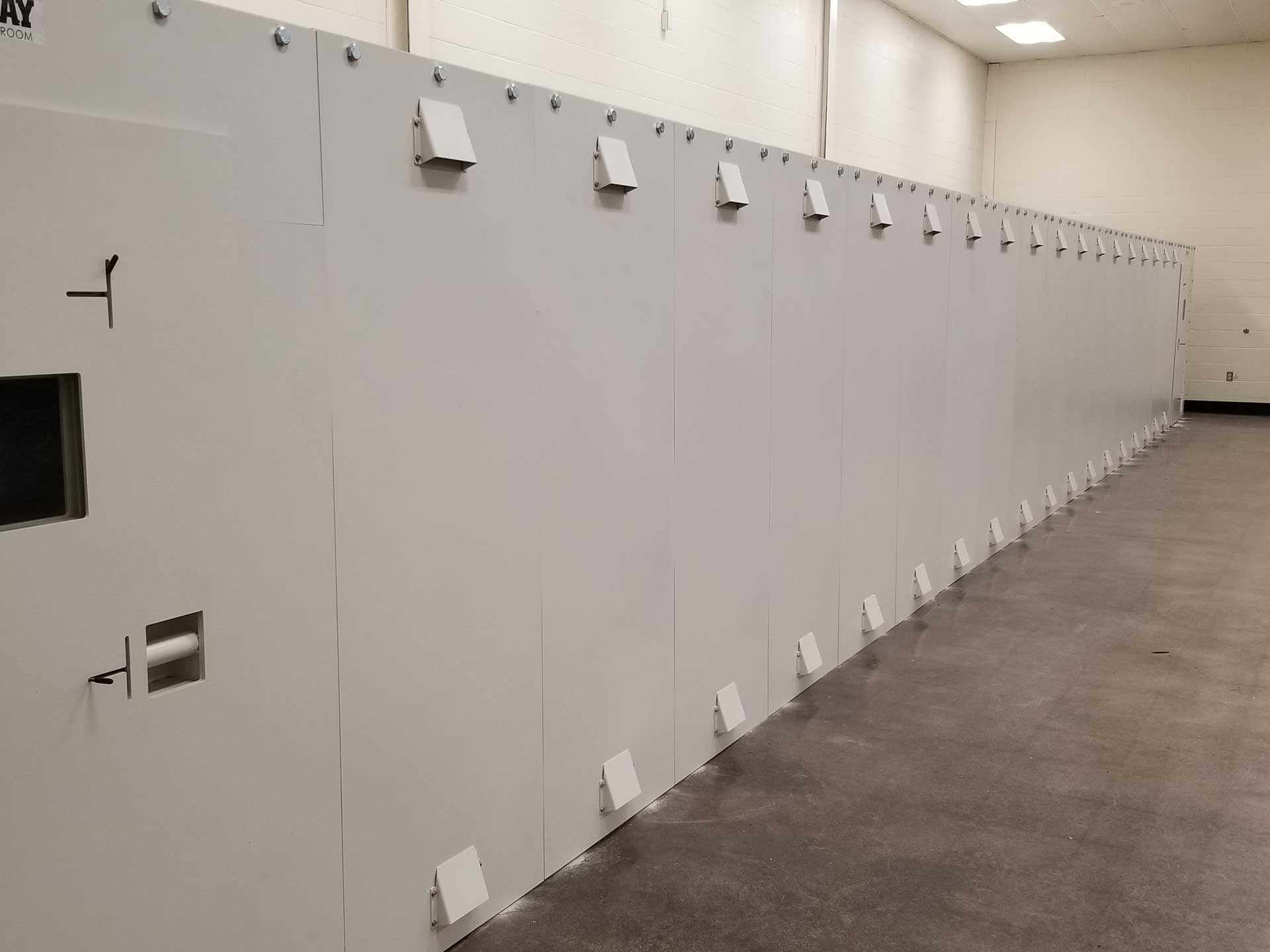
For schools that have already invested in securing classrooms, the next layer of protection is to give students and staff in large common areas somewhere truly safe to go. One promising option is fixed, multi-purpose shelters that are both bulletproof and tornado-rated. In an emergency—whether an active shooter or extreme weather—students can move quickly into these hardened structures and remain there until the crisis passes. Placed strategically within cafeterias, libraries, and gymnasiums—or even outside near a jungle gym—these shelters can protect large numbers of students without requiring expensive, building-wide reconstruction.
The goal is not to turn cafeterias, libraries, and gyms into bunkers. It is to acknowledge their unique vulnerabilities, provide practical tools, and give every student a clear, realistic path to safety if the unthinkable happens.
Ready to move beyond classroom-only security and start protecting cafeterias, libraries, playgrounds, and gyms too? Subscribe to our newsletter for practical, budget-conscious strategies, expert insights, and real-world solutions to protect your school’s most vulnerable spaces.